
Spiral
The American-Israeli Military Campaign Against Iran Is at An Inflection Point

On March 18, 2026, Israeli Air Force jets struck natural gas processing facilities in the South Pars field off the coast of Iran’s Bushehr province—the largest natural gas deposit on earth. Within hours, Iran’s Islamic Revolutionary Guard Corps issued evacuation warnings for energy installations across Saudi Arabia, the United Arab Emirates, and Qatar, identifying five facilities by name as imminent targets. Iranian ballistic missiles then struck the Ras Laffan Industrial City in Qatar—a facility operated by QatarEnergy that anchors the country’s position as the world’s largest exporter of liquefied natural gas—causing what the company described as “extensive damage.” Saudi Arabia reported intercepting four ballistic missiles launched toward Riyadh and a drone attack on an eastern gas facility. Qatar expelled Iran’s military and security attachés from Doha. Brent crude settled above $107 per barrel, having briefly touched $109, while European natural gas benchmarks surged six percent in a single session.
Fault Lines | March 20, 2026
The strike on South Pars almost certainly was coordinated with—and possibly approved by—the Trump administration, though the President later denied any prior U.S. authorization. An Israeli official characterized it as a signal of what could follow if Iran continued disrupting oil flows through the Strait of Hormuz. President Trump described it as putting Iran “out of business.” The same 48-hour window produced the assassinations of three of Iran’s most senior officials: Ali Larijani, secretary of the Supreme National Security Council; Gholamreza Soleimani, commander of the Basij paramilitary forces; and Esmail Khatib, the minister of intelligence—the most concentrated decapitation sequence since Ayatollah Khamenei himself was killed on the war’s opening day. Israeli Defense Minister Israel Katz announced that Prime Minister Netanyahu had authorized the military to eliminate any senior Iranian official without requiring further approval. Meanwhile, at least three Israeli divisions had launched ground operations across southern Lebanon in what officials described as the largest incursion since 2006, with plans to seize the entire area south of the Litani River.
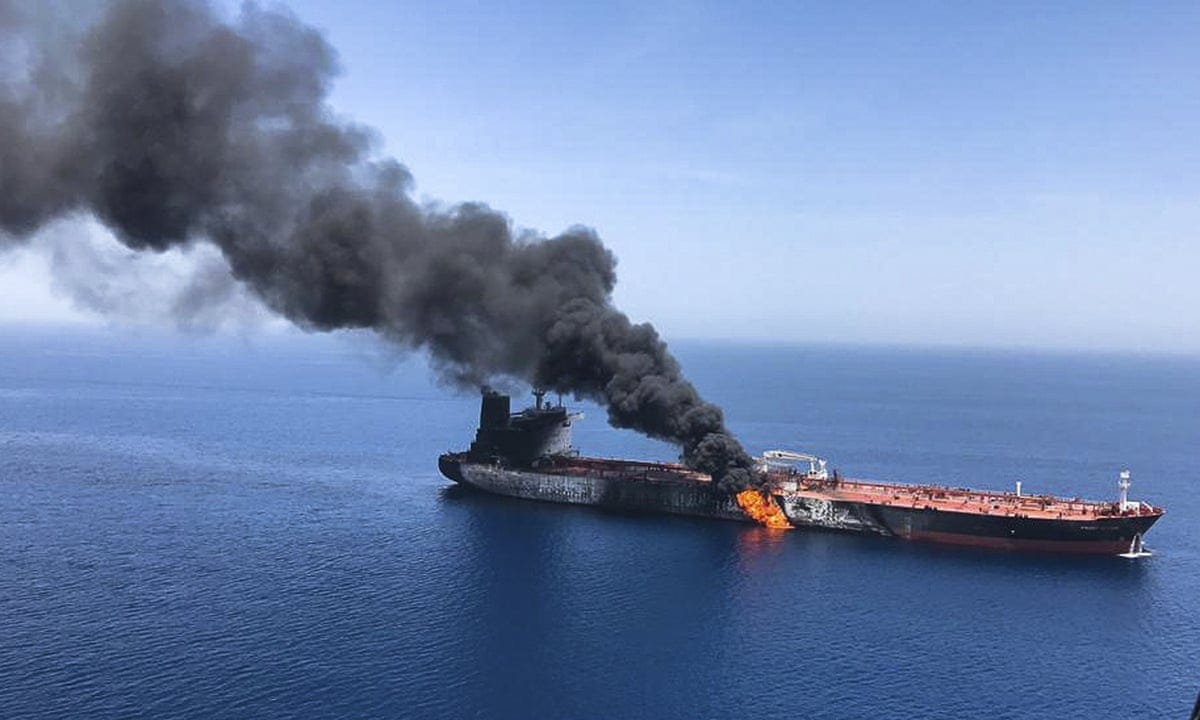
This convergence of events—energy infrastructure under fire, Gulf states absorbing missile strikes, a ground invasion expanding in Lebanon, and the systematic elimination of Iran’s senior leadership—represents the densest escalation sequence since Operation Epic Fury began on February 28. It also marks a qualitative threshold. The US-Israeli campaign has crossed from a war against Iran into a conflict that is destabilizing the entire energy and security architecture of the Persian Gulf, drawing in states that sought no part in the fighting and generating costs that may ultimately constrain American power more than Iranian power. What began as a campaign premised on rapid, decisive strikes to neutralize Iranian threats has become something far more expansive—and far more dangerous—than its architects anticipated.
The dynamics at work are not novel. They follow patterns that have recurred across modern conflicts, patterns that the University of Chicago’s Robert Pape has described as the “Escalation Trap”. Each tactical success produces strategic disappointment. Leaders respond by escalating rather than reconsidering the strategy. The opponent retaliates not where the attacker is strongest but where it is most vulnerable. The war widens. The costs compound. And the exit narrows with every passing week.
The Logic of the Trap
The concept of the Escalation Trap rests on a straightforward observation about the relationship between military force and political outcomes. Tactical success—destroying targets, killing commanders, degrading capabilities—does not automatically produce the political result the attacker seeks. When the expected political outcome fails to materialize, decision-makers face a choice: reconsider the strategy or intensify it. In practice, intensification almost always wins. The stronger side possesses escalation dominance—the ability to climb the ladder faster and higher than the opponent—and leaders assume this advantage translates into escalation control. It rarely does.
Operation Epic Fury was designed as a demonstration of overwhelming firepower and precision. The opening strikes on February 28 killed Supreme Leader Khamenei and destroyed military facilities across Iran. In purely tactical terms, the campaign was extraordinarily successful. But the political objective—regime capitulation, collapse, or fundamental behavioral change—did not follow. The Iranian state remained intact. Command authority transferred. Within hours, Tehran launched retaliatory missile and drone salvos against Israel, U.S. bases in the Gulf, and neighboring states. The gap between battlefield achievement and political result was immediate and unmistakable.
What followed was textbook escalation. The assassination campaign intensified—not one or two senior officials, but a systematic effort to dismantle Iran’s command structure. The targeting expanded to encompass energy infrastructure. Israeli ground operations in Lebanon opened a second major front. Each escalatory step was tactically rational in isolation. Killing Larijani removed the most influential figure in Tehran’s national security apparatus. Striking South Pars signaled that Iran’s economic lifeline was vulnerable. Invading Lebanon addressed an ongoing Hezbollah rocket threat. Yet the cumulative effect has been to widen the war’s geography, multiply its participants, and accelerate the very dynamics of horizontal escalation that Iran is better positioned to exploit.
Pape has identified a variant of this pattern he calls the Smart Bomb Trap, in which the seductive precision of modern airpower creates a particular form of strategic blindness. Precision strikes produce visually dramatic results—command centers destroyed, missile sites cratered, leaders eliminated—that generate confidence in the strategy’s effectiveness. When the political situation fails to improve, the logical conclusion is not that the approach is flawed but that the campaign has not gone far enough. The bombing therefore expands. The opponent, meanwhile, retaliates asymmetrically—not where the attacker is strongest, but where it is most exposed. Iran’s response to the South Pars strike illustrates this with painful clarity. Tehran did not attempt to shoot down Israeli jets. It fired missiles at Qatar’s Ras Laffan facility—striking at the economic foundations of a U.S. ally that hosts CENTCOM’s forward headquarters—and threatened identical attacks on Saudi and Emirati infrastructure. The cost was imposed not on the attacker but on the coalition’s vulnerable periphery.
Energy as Weapon: The South Pars Threshold
The decision to strike South Pars represents a crossing point that cannot be walked back. Until March 18, the United States and Israel had largely refrained from targeting Iran’s energy production infrastructure in the Persian Gulf, precisely because of the retaliatory dynamic that immediately materialized. The restraint was not altruistic; it reflected a calculation that the costs of Iranian retaliation against Gulf energy facilities would outweigh the benefits of degrading Iranian revenue. That calculation has now been discarded.
The strategic significance of South Pars extends beyond its role in Iran’s economy. The field is the Iranian half of a geological formation shared with Qatar, whose North Field constitutes the other half. Qatar’s foreign ministry condemned the Israeli strike as targeting infrastructure that threatens global energy security, pointedly noting the shared nature of the resource. The environmental and geological risks of attacking offshore gas infrastructure in a shared formation are substantial, though they have received little attention amid the pace of escalation. For Doha, the strike hit uncomfortably close to the physical foundations of Qatari wealth and sovereignty—a fact that Iran’s retaliatory strike on Ras Laffan converted from theoretical concern to material reality within hours.
The energy dimension of this war has now entered territory without modern precedent. Iran’s de facto closure of the Strait of Hormuz, which normally carries roughly twenty percent of global oil and LNG supplies, has reduced tanker traffic by approximately ninety-seven percent since the war began. And Iranian attacks this week against the western Saudi port of Yanbu and UAE’s al-Fujairah oil terminal—which each sit astride the only two East-West oil pipelines that offer an alternative to the Strait of Hormuz chokepoint—demonstrate Tehran’s willingness and capability to carry the war into the Red Sea. And this was without the help of the Houthis who previously demonstrated the ability to reduce commercial shipping in the Red Sea and the Bab al-Mandab Strait. Both of the Gulf’s maritime exits are now under direct threat. Major container shipping companies—Maersk, CMA CGM, Hapag-Lloyd—have suspended transits through both chokepoints. QatarEnergy declared force majeure on all LNG shipments in early March, removing roughly twenty percent of global LNG supply from the market. Officials in Doha also are warning that fully restoring LNG shipments to prewar levels could take 3-4 years because of damage sustained so far at Ras Laffan.
Pape has drawn comparisons to the 1973 Arab oil embargo, and the parallel is instructive—but it understates the current danger. In 1973, the disruption was an organized production cut by willing state actors pursuing a coordinated political objective. The supply reduction was deliberate and calibrated. In 2026, the disruption is kinetic. Missiles are striking infrastructure. Ships are being attacked at chokepoints. The physical geography of the Gulf is being weaponized through a combination of naval interdiction, missile strikes, and the destruction of processing capacity. The mechanisms of disruption are far more difficult to reverse than a policy decision to resume exports, because they involve physical damage to facilities, the withdrawal of maritime insurance, and the destruction of the confidence upon which commercial shipping depends.
The economic consequences are already severe and will compound. Oil prices have surged from approximately $70 per barrel before the war to above $107—a roughly fifty percent increase. That’s the price for Brent oil crude, which reflects the paper market that oil traders watch; prices for Gulf-produced oil are much higher. Omani crude for example, now hovers around $160 per barrel. Qatar’s energy minister warned in early March that if the war continues, other Gulf producers may be forced to halt exports entirely, warning that the result would be to bring down the economies of the world. Nearly fifty percent of global urea and sulfur exports, critical agricultural inputs, transit the Strait of Hormuz; prolonged disruption threatens a global fertilizer shock with cascading effects on food security. Saudi Arabia has attempted to reroute crude exports through Red Sea ports, principally Yanbu, to bypass the Hormuz blockade—but these alternative flows must transit the Bab al-Mandab Strait, where the Houthis now threaten to close the second chokepoint. If both routes are simultaneously denied, the result would be the most severe disruption to global energy supply in the history of the petroleum economy.
The Second Front: Lebanon and Strategic Overextension
While the world’s attention has been fixed on Iran, Israel has opened a second major theater. The Israeli military has concentrated approximately six divisions along the northern border, with ground operations underway across southern Lebanon since mid-March. Evacuation orders have been issued not only for areas south of the Litani River but, for the first time, for communities north of the Litani and for Hezbollah’s stronghold in Beirut’s southern suburbs. More than one million Lebanese civilians have been displaced. Israeli attacks have killed at least 850 people, among them over 100 children.
The stated objective is to seize the entire area south of the Litani River—roughly the southern third of Lebanon—in order to dismantle Hezbollah’s military infrastructure and create a buffer zone protecting northern Israel. One senior Israeli official described the operational model bluntly: the intention is to replicate what Israel did in Gaza. The IDF has deployed the 91st, 36th, and 146th Divisions into the western and eastern sectors of southern Lebanon, with fierce fighting reported at the strategically located town of Khiam, which sits on high ground commanding northern Israel and controlling key supply routes to the Bekaa Valley.
The analytical point is not simply the scale of the invasion—which is indeed the largest Israeli ground operation in Lebanon since 2006 and potentially the most significant since 1982—but what it reveals about strategic overextension. Israel is simultaneously conducting a leadership decapitation campaign across Iran, a ground invasion of Lebanon, sustained operations in Gaza, and the defense of its own territory against ongoing missile and drone salvos. Each of these operations is tactically demanding. In combination, they create a resource burden and an exposure to risk that no state, however capable, can sustain indefinitely without degradation of effectiveness across all theaters.
The Lebanon operation also generates its own escalation trap. Ground forces advancing into fortified terrain against a motivated adversary with decades of preparation for precisely this contingency will achieve territorial gains—Hezbollah cannot match Israeli conventional power in open battle. But the occupation of southern Lebanon creates a new set of problems: the defense of seized territory against guerrilla resistance, the management of a displaced civilian population, the political burden of indefinite occupation, and the risk of casualties that erode domestic support. Analysts have warned that while the invasion may achieve its security objective of pushing Hezbollah away from the border, it will not destroy the organization. Israel has been here before. Its 1982 invasion of Lebanon produced an eighteen-year occupation that ended in unilateral withdrawal. The 2006 war ended inconclusively. The structural dynamics have not changed.
The Compounding Costs for the United States
For the United States, the war is generating costs across every dimension of national power—military, economic, diplomatic, and strategic—at a pace and scale that demand serious assessment.
Military costs. Trump administration officials estimated that the first six days of the war cost the United States approximately $11.3 billion, according to members of Congress leaving a closed-door briefing. By day twelve, that figure had risen to an estimated $16.5 billion. The Pentagon consumed roughly one full year’s production of PAC-3 interceptors—approximately 620 missiles—in under two weeks. A quarter of the U.S. THAAD interceptor inventory was expended in the opening days. The cost-exchange ratio is devastating: Iran spends an estimated $35,000 to produce a Shahed drone; the PAC-3 missile used to destroy it costs $4 million—a ratio of more than 100-to-1 in Tehran’s favor. Secretary of State Marco Rubio acknowledged the structural asymmetry publicly, noting that Iran produces over 100 missiles per month compared to six or seven interceptors produced by the United States. The Pentagon has submitted a $200 billion supplemental budget request to begin replacing expended munitions.
These figures carry implications beyond the Iranian theater. THAAD batteries were redeployed from South Korea to the Middle East, generating anxiety in Seoul about deterrence against North Korea. South Korean President Lee Jae-myung expressed concern about the relocation, though he acknowledged limited ability to prevent it. Democratic senators have noted the irony that the administration previously cited limited interceptor stockpiles as the reason it could not supply Patriot missiles to Kyiv. A CENTCOM planning memo requesting intelligence officers for at least 100 days—through September at minimum—suggests the operational timeline extends far beyond the four-to-five-week window the president initially suggested.
Economic costs. The macroeconomic impact extends well beyond oil prices. The effective closure of Hormuz and the renewed disruption of Red Sea shipping have produced the greatest supply shock in oil market history. Airspace closures across the Gulf have grounded thousands of flights, devastating the aviation and tourism sectors that Gulf economies have spent decades cultivating. Stock markets declined sharply—the Dow Jones fell over 400 points on the war’s second day alone. European growth forecasts have been revised downward, with eurozone GDP potentially reduced by 0.1 percent and inflation rising by 0.5 percent. Shipping costs have surged as vessels reroute around the Cape of Good Hope, adding weeks to transit times and billions in cost to global supply chains. For American consumers, the war’s most direct impact will arrive at the gas pump and the grocery store—and it will arrive before any political benefit from the campaign becomes apparent.
Diplomatic costs. The war has exposed the limits of American alliance management with uncomfortable clarity. When President Trump called for a naval coalition to secure the Strait of Hormuz, the response was silence. Germany, Italy, Luxembourg, Romania, Spain, and the United Kingdom ruled out military involvement. France stated it would consider naval escort operations only after the fighting stops. Japan, South Korea, and Australia declined to participate. Trump publicly attacked these allies for their refusal, declaring that the United States did not need anyone’s help—a posture that simultaneously demanded allied support and insisted on unilateral prerogative.
The diplomatic failure runs deeper than reluctant allies. The states absorbing the most direct consequences of Iranian retaliation—Qatar, Saudi Arabia, the UAE, Bahrain, Kuwait—are American partners who host the very military infrastructure enabling the campaign. They are being struck by Iranian missiles as a consequence of a war they did not initiate and may not have endorsed. Qatar’s condemnation of the South Pars strike was notably directed at Israel, not Iran. Gulf states are negotiating directly with Tehran for safe passage through Hormuz—a remarkable spectacle in which American allies bypass Washington to treat with Washington’s adversary over access to a waterway the U.S. Navy is ostensibly committed to keeping open. China is conducting its own negotiations with Iran for passage of its vessels, positioning itself as a more effective guarantor of commercial access than the United States. The Abraham Accords framework—the signature diplomatic achievement of the first Trump administration—is under extraordinary strain as the states it was meant to bind into a pro-American regional architecture absorb Iranian strikes that are a direct consequence of the American-Israeli campaign.
Strategic coherence. Perhaps the most consequential cost is the war’s impact on the broader architecture of American strategic competition. Every interceptor expended in the Gulf is one unavailable for the Western Pacific. Every intelligence officer deployed to CENTCOM is one not focused on China or Russia. Every diplomatic relationship strained by the Gulf conflict is one less available for coalition-building in other theaters. The United States entered this war at a moment when it was already managing competition with China, supporting Ukraine’s defense against Russia, and attempting to maintain deterrence on the Korean Peninsula. The Iran war does not exist in isolation; it draws from the same finite pool of military assets, diplomatic capital, and strategic attention that these other commitments require. Russia, notably, is already assisting Iran with intelligence and targeting support—a direct consequence of Moscow’s interest in keeping the United States overextended.
Horizontal Escalation and the Roads Ahead
Iran’s strategy is legible and, by its own logic, effective. Tehran cannot defeat the US-Israeli coalition in a conventional military contest. Its air defenses are degraded. Its senior leadership is being systematically eliminated. Its military infrastructure is under sustained bombardment. But conventional military defeat is not the metric that matters. Iran’s objective is to impose costs on the coalition’s broader interests—its Gulf partners, its energy security, its economic stability, its alliance relationships—sufficient to generate political pressure for a negotiated outcome. Pape describes this as horizontal escalation: widening the geographic and political scope of the conflict to multiply arenas of risk for the stronger party.
The strategy follows a recognizable sequence. First, demonstrate resilience—launch retaliatory strikes within hours of losing the supreme leader to signal continuity of command. Second, target the coalition’s vulnerabilities rather than its strengths—strike Gulf energy infrastructure, close Hormuz, threaten commercial shipping. Third, exploit the cost asymmetry—use inexpensive drones and missiles to exhaust expensive interceptor stockpiles. Fourth, fracture the coalition’s political cohesion—force Gulf states to choose between alignment with Washington and accommodation with Tehran. Each element of this strategy is already operational.
The most likely vector for further escalation is Yemen. Saudi Arabia’s rerouting of crude exports through Red Sea ports to bypass Hormuz creates a new vulnerability: those shipments must transit the Bab al-Mandab Strait, where Houthi forces demonstrated over two years of sustained capability to disrupt commercial shipping. Approximately seventy-five percent of Saudi crude exports are destined for Asian markets, meaning tankers must pass through the strait twice—once to collect cargo and once to deliver it. The Houthis have already announced the resumption of attacks on commercial vessels. If they close the Bab al-Mandab in coordination with Iran’s closure of Hormuz, the result would be the simultaneous denial of both maritime exits from the Gulf—a scenario that no contingency plan has adequately addressed.
Beyond Yemen, the conflict’s potential for geographic expansion is substantial. Iranian-aligned militias in Iraq retain the capability to strike U.S. forces and regional infrastructure. The Hezbollah front in Lebanon is now a full-scale ground war. Iran has struck targets in Bahrain, Oman, and Saudi Arabia. The airspace of multiple Gulf states has been repeatedly closed. GPS interference has been documented across Emirati, Qatari, Omani, and Iranian waters. The war’s footprint already spans from the eastern Mediterranean to the Gulf of Oman, and its effects ripple through global energy markets, shipping routes, and financial systems. Each additional escalatory step—and the South Pars strike makes clear that additional steps are coming—widens that footprint further.
Three Roads from Here
The most troubling aspect of the current trajectory is not the escalation itself but the narrowing range of options available to American decision-makers. Three weeks into Operation Epic Fury, the United States confronts a strategic landscape in which none of the plausible paths forward is attractive—but in which the cost of indecision compounds daily. Some version of the following discussion is, one hopes, occurring now in the White House Situation Room. Each option carries significant risks. None guarantees the outcomes that justified the campaign’s initiation. But the choice among them will define American strategic positioning in the Middle East for years to come.
Option One: Declare Victory
President Trump’s March 20 statement that the United States is “getting very close to meeting our objectives” and considering “winding down” military efforts signals that this option is under active consideration. Under this scenario, the president would declare that Operation Epic Fury has accomplished its core objectives—the destruction of Iran’s air defenses and navy, the degradation of its missile and drone production capacity, and the elimination of senior military and intelligence leadership—and unilaterally cease offensive strikes. Washington would then press Israel to follow suit, and backchannel messaging to Tehran would convey the expectation that Iran match the cessation with its own ceasefire and the reopening of the Strait of Hormuz.
The case for this option is straightforward. If the cessation of hostilities holds, the energy bottleneck begins to resolve. Oil prices recede from crisis levels. The cascading economic damage—to Gulf allies, to European energy security, to global food supply chains—is arrested before it becomes structural. Iran’s military capabilities have been substantially degraded: its air force and navy are effectively destroyed, its missile and drone production infrastructure has absorbed weeks of precision strikes, and its senior leadership cadre has been decimated. These are real and consequential achievements. Further loss of life—among American service members, Iranian civilians, Gulf state populations absorbing retaliatory strikes, and Lebanese caught in the ground offensive—can be curtailed.
The case against is equally compelling. Iran gets a vote on whether a cessation of hostilities holds. Tehran may calculate that it has more to gain by continuing to extract costs from the coalition—sustaining low-level harassment of shipping, maintaining the Hormuz closure as leverage, and allowing the Houthis to continue Red Sea operations—than by accepting a return to the status quo ante. Iranian officials have already signaled that the Strait will not simply return to its pre-war status. Foreign Minister Araghchi has stated that new arrangements for passage will be required—language that implies Tehran intends to retain leverage over the waterway even after fighting subsides.
More fundamentally, virtually none of the stated US political objectives would be accomplished. The regime is battered but intact—and perhaps now more hardline than before the war began. The assassination of Larijani, who had been engaged in indirect talks with Washington, and the elevation of Mojtaba Khamenei as supreme leader suggest a leadership cohort with less inclination toward accommodation, not more. Iran’s military and security apparatus is decimated but can be rebuilt. Much of Tehran’s missile force was produced domestically; the industrial base is damaged but not obliterated, and the knowledge base remains intact. The nuclear program is closer to destruction than at any prior point, but the regime retains access to an estimated 440 kilograms of enriched uranium, surviving centrifuges, and—critically—the scientific expertise to reconstitute. The IAEA director general has publicly stated that the war cannot entirely eliminate Iran’s nuclear program. The deepest paradox of this option is that a campaign partly justified by the imperative of preventing Iranian nuclear capability may have made that capability more likely. “Declare victory” leaves the United States with an even more implacable Iranian regime that has even less incentive to disarm or postpone a rush to acquire the bomb. The war will have demonstrated to Tehran that only a deliverable nuclear deterrent can prevent a repetition of February 28.
Option Two: Escalate to De-Escalate
Under this scenario, the United States concludes that the current level of military pressure is insufficient to compel Iranian compliance on the Strait of Hormuz and other objectives, and that a sharp, decisive escalation—imposing costs so severe that Tehran calculates continued resistance is untenable—offers the fastest path to a favorable resolution. In practice, this would likely involve several components:
Forced reopening of the Strait of Hormuz. The Pentagon has already deployed A-10 Warthog ground-attack aircraft and AH-64 Apache gunships to target Iranian fast-attack craft and one-way attack drones threatening shipping. CENTCOM has employed GBU-72 5,000-pound penetrator munitions against underground missile silos along the Iranian coastline. But military analysts broadly agree that air and naval operations alone cannot secure a 100-mile-long strait bordered by mountainous Iranian terrain purpose-built for asymmetric warfare. Full security would likely require ground forces to establish a buffer zone along the Iranian coast—a contingency for which 2,500 Marines trained in amphibious operations are now being dispatched to the region.
Seizure of Kharg Island. The island at the northern end of the Persian Gulf handles approximately ninety percent of Iran’s crude oil exports. Its capture would eliminate Iran’s primary source of foreign exchange revenue and provide the most potent economic leverage available short of regime collapse. The White House has reportedly discussed this option, and the US military strike on Kharg earlier this month was characterized by officials as a signal of how far Washington is willing to go. Seizing and holding the island would require a contested amphibious landing and a sustained defensive operation against Iranian missile and drone counterattack—a significant military undertaking with the potential for substantial casualties.
Intensified strikes on Iranian economic infrastructure. This would extend the targeting logic of the South Pars strike to refineries, petrochemical facilities, power generation, and transportation networks—systematically degrading the Iranian economy to the point where the regime’s survival calculus shifts.
The case for escalation. It addresses the core strategic problem that the current campaign has not resolved: Iran’s retention of leverage through the Hormuz closure and horizontal escalation. Seizing Kharg Island, in particular, would convert Iran’s energy exports from an asset into a hostage—giving Washington a bargaining chip of enormous value. A Defense Intelligence Agency assessment reportedly concluded that Iran could maintain the Strait closure for one to six months under current conditions; escalation aimed at physically securing the waterway and eliminating Iran’s capacity to threaten shipping would shorten that timeline. It also signals resolve to allies and adversaries alike. The perception that the United States initiated a war and then walked away without achieving its objectives—or resolving the economic crisis the war created—would inflict lasting damage on American credibility.
The case against is severe. Ground operations on Iranian territory or its coastal islands would represent a qualitative escalation that transforms the conflict from an air campaign into something far more dangerous. The United States would be putting troops in direct contact with an adversary that has spent decades preparing for exactly this contingency. Iran’s asymmetric capabilities—fast-attack boats, anti-ship missiles, mines, and the mountainous coastal terrain—are optimized for imposing casualties on a conventional force attempting to control the Strait. The cost-exchange ratio that already disadvantages the United States at the interceptor level would become even more punishing at the ground-force level. Holding Kharg Island or a coastal buffer zone would require sustained logistics, air defense, and force protection against continuous drone and missile harassment—an open-ended commitment with no natural termination point.
Escalation also forecloses diplomacy. It is difficult to negotiate with a government whose territory you are occupying and whose economic lifeline you have seized. The domestic political dynamics within Iran—already radicalized by the killing of Khamenei and the decapitation campaign—would move further toward irreconcilability. Perhaps most critically, escalation to de-escalate assumes that a threshold of pain exists beyond which the Iranian regime capitulates. The historical evidence for this proposition is weak. Pape’s research on coercive bombing campaigns demonstrates that escalation more commonly produces nationalist consolidation than political submission. The Islamic Republic has endured eight years of war with Iraq, decades of sanctions, and now weeks of devastating airstrikes without fracturing. The assumption that one more turn of the screw will break it is the defining illusion of the Escalation Trap.
Option Three: Negotiate
Under this scenario, the administration calculates that three weeks of devastating military operations have generated sufficient leverage to negotiate a cessation of hostilities from a position of strength. Rather than unilaterally declaring victory or escalating further, Washington would pursue a negotiated framework that trades the cessation of strikes—and the implicit threat of their resumption—for Iranian commitments on the Strait, a ceasefire, and a defined pathway to post-conflict arrangements.
The case for negotiation. A negotiated cessation provides greater assurance than a unilateral declaration that the Strait will actually reopen and that retaliatory strikes against Gulf states will cease. Markets and allies would have something concrete to point to rather than a presidential Truth Social post. The United States holds genuine leverage: Iran’s military is shattered, its leadership decimated, its economy under extraordinary strain, and its international isolation—underscored by Qatar’s expulsion of Iranian military attachés and the near-universal condemnation of the Ras Laffan attack—more acute than at any point since the revolution. These are negotiating assets that depreciate over time; they are most valuable now. A negotiated framework could include provisions for international monitoring of the Strait, arrangements for the phased resumption of commercial shipping, and confidence-building measures that reduce the risk of a return to hostilities. France, China, India, and the EU have all expressed interest in diplomatic solutions—potential guarantors or facilitators that could lend credibility to any agreement.
The case against. Tehran would demand concessions of its own before agreeing, and its demands would be substantial. Iran would seek assurances against future attack—security guarantees that the United States and Israel would be reluctant to provide and that Tehran would have reason to doubt. It would seek flexibility to rebuild its deterrent capability, particularly its missile and drone programs, which it views as essential to regime survival. It would likely demand sanctions relief and reparations for infrastructure damage. The nuclear question and broader political issues would almost certainly be off the table in any near-term negotiation. Tehran would refuse to negotiate away its nuclear program under duress, and the United States would be unlikely to offer the comprehensive sanctions relief that Iran would require in exchange. The result would be a narrow agreement focused on the immediate crisis—the Strait, the ceasefire, the cessation of attacks on Gulf infrastructure—that leaves the deeper drivers of conflict unresolved.
The Israeli variable complicates any negotiation enormously. Netanyahu has authorized the military to target Iranian officials at will and has shown no inclination toward restraint. A US-Iran negotiation that required Israeli compliance with a ceasefire would test the limits of Washington’s influence over Jerusalem at a moment when the Israeli government is pursuing its own maximalist objectives in Lebanon and Iran simultaneously. Conducting negotiations against the backdrop of the Strait’s closure gives Iran additional leverage—every day the waterway remains shut, the economic pressure on the coalition intensifies, strengthening Tehran’s hand. The assassination of Larijani, moreover, removed one of the few Iranian officials with the stature, relationships, and pragmatic inclination to serve as a credible interlocutor. It is unclear who, if anyone, now occupies that role on the Iranian side.
None of these options is satisfactory. That is the nature of the strategic position the United States now occupies. Declaring victory risks leaving the most dangerous consequences of the war—Hormuz, the nuclear question, an embittered and radicalized Iran—unresolved. Escalating risks a ground commitment in the most geographically inhospitable theater imaginable, with no assurance that the additional pain will produce the desired political outcome. Negotiating requires accepting that many of the campaign’s stated objectives are unachievable and that Tehran will extract a price for cooperation.
What is clear is that the current trajectory—continued strikes that degrade Iranian capability without producing political capitulation, while the economic and diplomatic costs compound daily—is itself a choice, and perhaps the worst one available. The logic of the Escalation Trap is that it generates its own momentum, foreclosing options and narrowing the decision space with each passing week. Three weeks in, the space is already narrow. The decisions made in the coming days will determine whether the United States exits this conflict with a defensible strategic position or finds itself deeper inside a spiral from which extraction becomes progressively more costly and less dignified.
The author is a former CIA intelligence officer with extensive experience on the Near East. This analysis draws on open-source reporting, regional analysis, and publicly available assessments. All statements of fact, opinion, or analysis expressed are those of the author and do not reflect the official positions or views of the US Government. Nothing in the contents should be construed as asserting or implying US Government authentication of information or endorsement of the author’s views.
Watch my Special Competitive Studies Project podcast, Intelligence at the Edge!